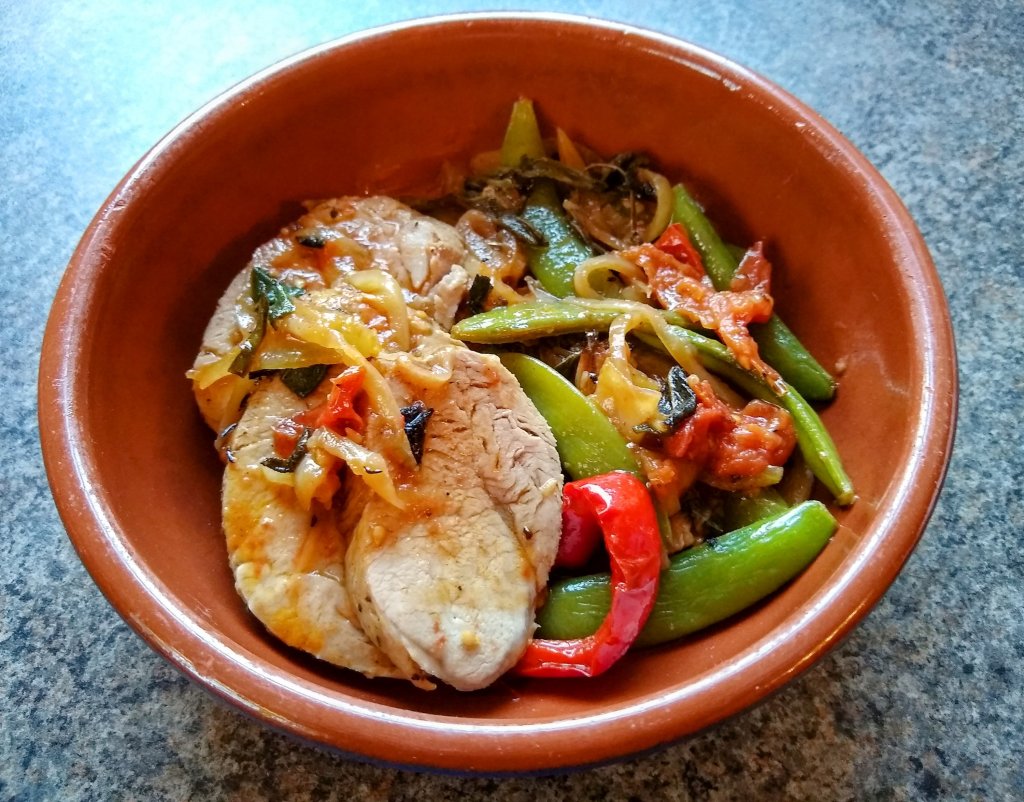
Pork tenderloin is a fantastic cut of meat. Lean but flavourful it has the versatility of chicken while providing a bit more of a meaty texture like beef. This recipe uses rich Mediterranean flavours to pair with the meaty pork to provide a satisfying dish without too much faff.
If you don’t have pork tenderloin then it would work reasonably well with pork chops, pork loin or even chicken, just adjust the cooking times accordingly.
Recipe
Serves 4. Active time: 10-15 mins. Cooking time: 30 mins. Brine time: up to 24 hours.
Ingredients
1 pork tenderloin (pork fillet)
1 bell pepper, sliced
1 onion, thinly sliced
1 cup cherry tomatoes or quartered tomatoes
4-6 cloves of garlic, roughly chopped
1 fennel bulb, thinly sliced (optional)
Fresh and/or dried herbs such as sage, oregano and parsley.
2-3 cups (approx) of mixed greens like mangetout, sugar snap peas and green beans.
Extra Virgin Olive Oil
Salt and pepper
Optional brine seasoning: dried sage/oregano, white pepper, garlic powder
Method
It’s highly recommended that you brine the pork before cooking. With it being such a lean cut it can be prone to drying out. Bringing is a process by which the meat is soaked in a salt and water solution, which caused the cell walls to break down a little and let the meat absorb the brine, making for a juicier end product.
To brine you only really need two things. Salt and water. Typically you want around 50g salt to 1 litre water. Stir well to dissolve. Place your meat in a sealable container (I like to use a food bag to get maximum coverage) and cover with the brine. You may wish to add some additional flavours here. A few good size pinches each of white pepper, dried herbs and garlic powder wouldn’t go amiss. You could also use fresh herbs (bruised slightly to release oils) and crushed garlic cloves if you like, especially if doing a longer brine. Allow the meat to sit in this solution in the fridge for up to 24 hours. Try and allow at least 4 hours but even 1 hour is better than nothing.
When ready to make the dish set the oven to 220°C and set a pan over a medium high heat and add a few glugs of Extra Virgin Olive Oil. Lift the meat from the brine and pat dry. When the oil is at a good heat add the meat to the pan and brown lightly all over for a few minutes. The aim here isn’t too cook it through, just start the caramelisation process. Lift off the heat.
In a baking dish drizzle a little oil then lay the thinly sliced onions and fennel if using across the bottom. Lay the fresh herbs on top of this, particularly up the middle. Set the meat on top of the bed of herbs then nestle the garlic, peppers and tomatoes all around. Sprinkle with a little salt. Pour over the oil from the pan and place the dish in the oven when it’s up to heat.
Set a timer for 25 mins. Meanwhile put a pot of water on to boil and add the greens. When tender (5-8 mins) drain and set aside.
When the 25 mins are up check the meat for doneness. If you poke it the juices should run clear. Better still would be to test with a meat thermometer, you want it to be about 63-65°C to still be tender and juicy without being underdone. If you’ve a larger fillet you may find it needs a bit longer, just check every five mins or so after that. When ready lift out of the oven and remove the meat to a chopping board to rest.
Add the contents of the baking dish to a pan on a medium-low heat along with the cooked greens and a splash or two of water to loosen and let simmer for a few minutes. The juices from the meat and veg should blend with the oil to form a bit of a sauce. Taste and add salt and pepper if needed.
When the meat had rested for about ten minutes, slice it to desired thickness. Any juices coming off it add to the pan with the vegetables and sauce. Add a big pile of vegetables onto a plate, lay a few slices of pork on top and spoon over the sauce.
This is delicious on its own or with a slice of crusty bread, but you could also serve it with brown rice, wholegrain pasta or another grain of your choice. Just remember to keep the grains to around a quarter of the plate and fill up on all that tasty veg.
A bit of a blether
Brine is a secret weapon for any sort of lean meat like chicken or pork. Follow the same process and just add flavours to suit the dish and it’ll make your meat juicy, tender and flavorful.
I’d highly recommend getting a meat thermometer, it really makes it easy to get meat cooked to just the right temperature so it remains juicy without being under cooked, and helps you stop from overcooking and having dry meat. Just make sure to stick the thermometer into the thickest part of the meat!
I included fennel as an optional as it brings a slight anise flavour to the mix. Using a herb like tarragon would do the same. This pairs beautifully with pork but as fennel isn’t always available, or isn’t too everyone’s taste, the dish is still good without it.
If you’ve any leftovers, store the meat in with the veg and sauce so when reheating it’ll stay moist and absorb all those good flavours.
Enjoy!
Matthew
 A Sincere Love of Food