White fish like cod, hake, coley and haddock (or whatever is local and sustainable to you) tend to have a mild taste that works well for a wide variety of dishes and flavours. They make for a quick and easy meal that is low in fat, full of vitamins and minerals and unlike oily fishes, tend to be lower in pollutants so you can eat as much as you wish as often as you wish without concern.
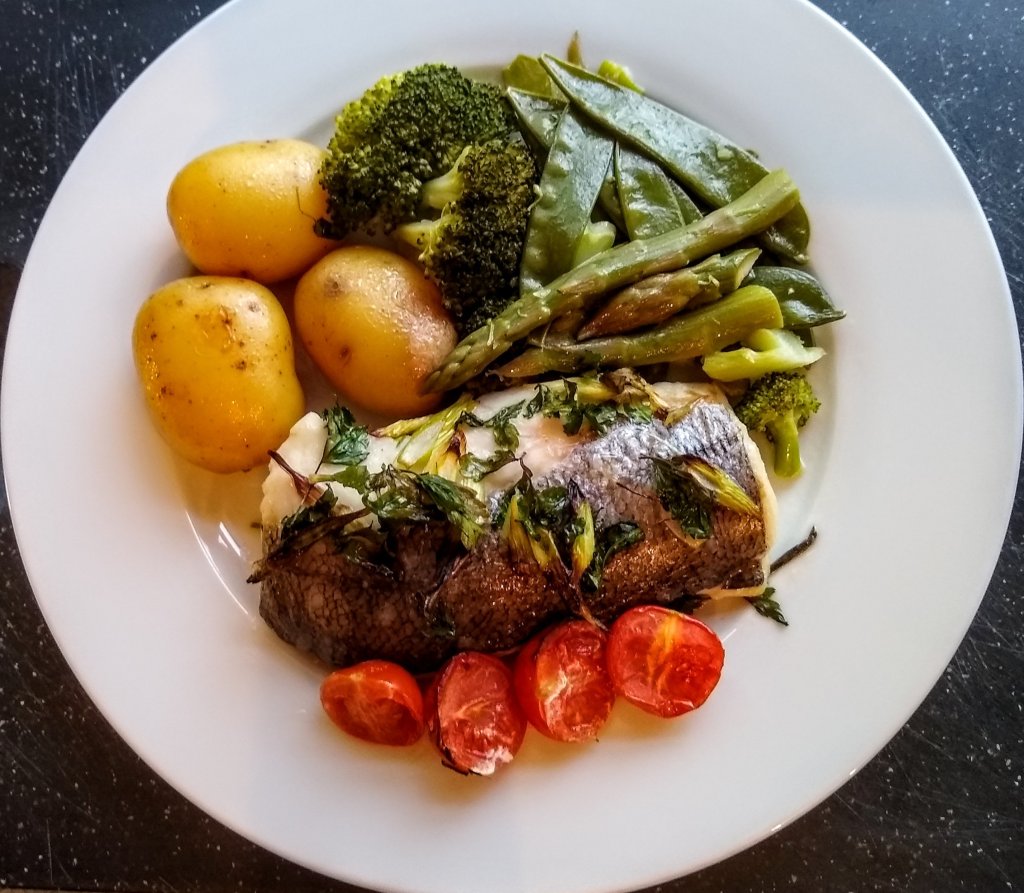
This is a basic recipe for baked fish that can be easily adapted to whatever you have on hand to make a quick and delicious meal. Here’s an example of a super simple version with lemon, herbs and fresh vegetables.
Recipe
2 servings. Active time 10 mins. Cooking time 20 mins.
Ingredients
2 fillets of sustainable white fish, fresh or frozen. I used hake here
1 lemon, sliced into 6-8 pieces leaving enough of the lemon ends to squeeze over the fish
A handful of fresh herbs, roughly chopped, or a few pinches of dried herbs. I used fresh tarragon and parsley here
4-8 Cherry tomatoes, halved (or more if you like!)
2 or 3 Spring onions/Scallions, roughly chopped
A load of seasonal veg, I used asparagus, mangetout, brocolli and baby new potatoes. Frozen veg works well too if that’s what you have available.
A good glug of Extra Virgin Olive Oil or Cold Pressed Rapeseed Oil
Salt and pepper
Water
Notes
If you have more (or less) mouths to feed, or simply want to make extra portions for lunch the next day, you can easily scale this recipe as needed.
You can’t really go too wrong on the proportions here, so if you like more lemon go for it, if you’re not a fan of scallions, no worries, and if you can’t get enough of those slightly sweet, slightly tart roasted cherry tomatoes, no one will judge you if you throw in a few more!
When serving just try and get as many fresh vegetables on as you can on the plate and try and keep starchy carbs like potatoes to a minimum, around a quarter of the plate at most.
Your gut (and waistline) will thank you.
Method
Preheat the oven to 180°C (375°F for any Americans).
Put a pot of water on to boil.
On a small baking tray or dish lay out the lemon slices, most of the herbs, and half the spring onion.
Drizzle with a little oil then lay the fish on top of this.
Cover the fish with the remaining spring onion and herbs, squeeze the last of the lemon over, adding them to the tray and nestle the cherry tomatoes in around the fish.
Drizzle with oil once again and add a splash of water (around a tablespoon or two) to the tray, then stick it in the oven and set a timer for 15 mins for a standard fillet. If you’ve a nice thick fillet then 20 mins is probably best and if your fish is frozen, add an additional 10 mins.
While the fish bakes, cook the vegetables in a steamer tray over the pot of boiling water. Or just boil them in the water if you can’t be bothered with all that. Steaming gives a nicer texture and keeps some more nutrients in but it’s your kitchen, your choice.
The baby new potatoes take about 15-20 mins while the greens needed around 5-7 mins. Your mileage may vary. Taste them and if they’re tender to your liking, then they’re done. Try and time then so they’re ready about the same time as the fish, but they’ll keep warm in the pot regardless so don’t stress it if you’re not bang on.
After the timer goes, check the fish in the oven. If you can stick a fork in the thickest bit and it flakes easily then it’s ready. If it’s still a little firm or translucent, give it another five to ten mins and try again.
Once ready, serve the fish onto a warm plate with the tomatoes, herbs and scallions. Drain the liquid in the pan into a bowl and whisk vigorously to combine the oil and juices a bit. Taste and add salt and pepper if needed. An extra squeeze of lemon probably wouldn’t go amiss either if you’ve any left over. If the liquid is very thin and watery you may wish to add another splash of oil and whisk vigorously again, but this isn’t essential.
Toss the vegetables in the liquid to coat then, then plonk then on the plate with the fish and pour any of the remaining liquid over the lot.
Serve up and enjoy!
A bit of a blether
I’m no great photographer as you can well see, but to be honest, I don’t want the pictures here to be perfectly polished and staged food art. If we spent the time and effort making our food as pretty as those glamour shots on professional food sites, carefully displayed on wrinkled table cloths with artistically scattered herbs and flowers all around, the food would be stone cold. We’re here to eat and enjoy good food, so cut the faff, whack it on a plate and tuck in.
Do not there are concerns about the sustainability of some white fish being prone to overfishing, so try and source a good sustainable fish supplier and avoid those fish that are over fished in your area. There are often less well known or popular alternatives that are just as delicious when cooked this way and it’s always good to increase the variety of foods you consume.
This style of cooking is very versatile and you can use whatever flavours you fancy. Different herbs, spices and aromatics will give you a different flavour profile and it works with a multitude of side dishes. Why not try this one with a side salad for a lighter summertime meal? Or instead of the lemon and herbs, try other mixes of flavours.
Ginger, garlic, spring onion, orange slices and soy sauce, for instance, give a nice Asian flavour, especially finished with a drizzle of sesame oil and served with stir fried vegetables and noodles. Lime, coriander, garlic, shallots and chilli give a zingier fish that works great with a chunky tomato and corn salsa and a bean salad. Adding different spices can make for a great accompaniment to an Indian style curry or a Moroccan tagine.
Explore and experiment and see what works for you. Just remember that white fish is mild and delicate so works best with bright and fresh flavours and if it’s your first time making it, keep it simple with some lemon and herbs and letting the fish shine through.
No doubt I’ll explore some of these combinations and others in future recipes, particularly when looking into baking fish wrapped in paper, but that’s for another post.
For now, grab a few fillets of the best white fish you can find, layer it up with some aromatics and a drizzle of oil and bang it in the oven until it flakes nicely. You won’t be sorry!
Thanks for reading,
Matthew
 A Sincere Love of Food